
01
Ecological role
A keystone native species of Southwest landscapes — a herbivorous lizard whose presence indicates a functioning desert food web of plants, predators, and pollinators.
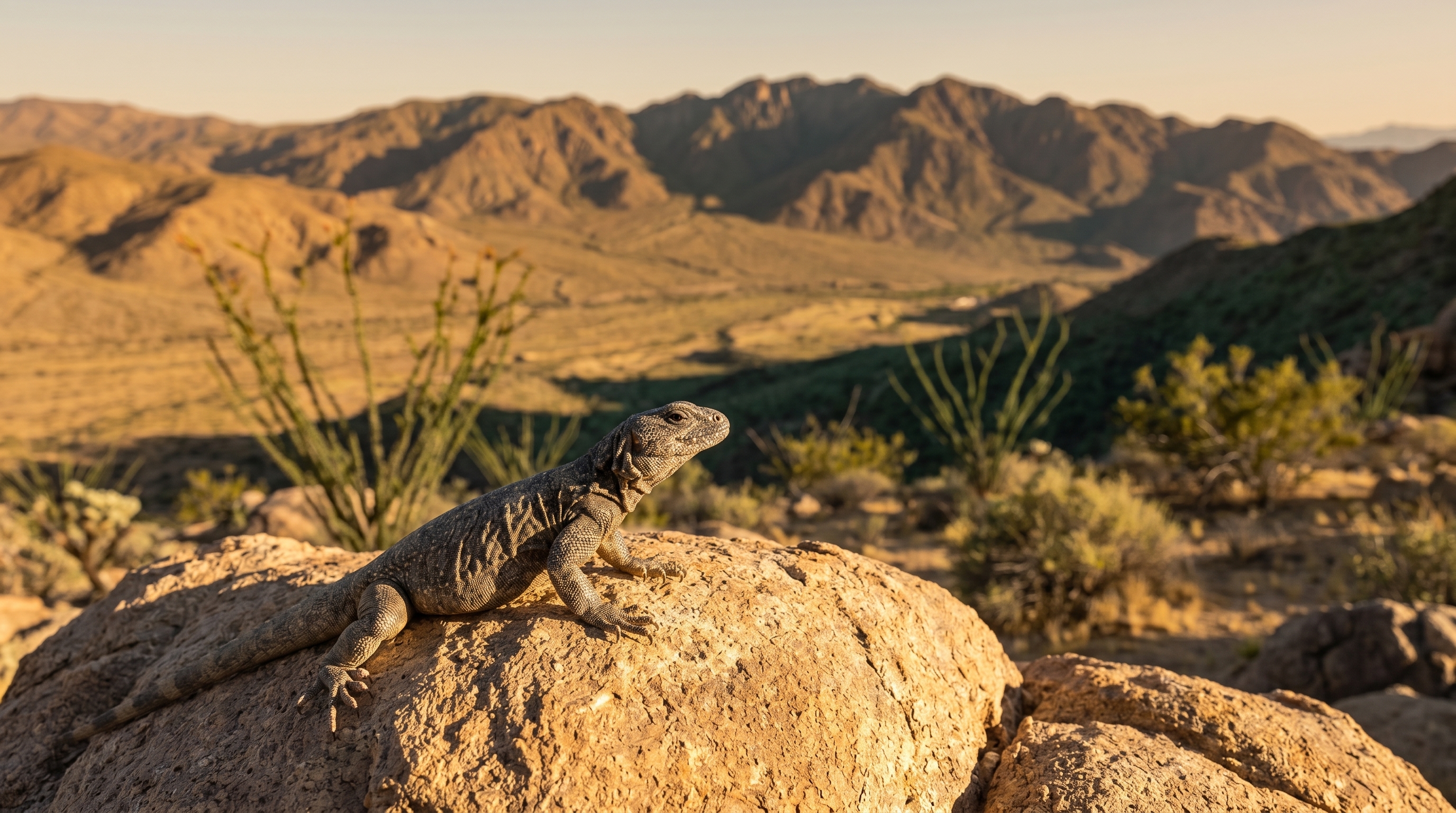
Desert native · cultural icon · shared future
Chuckwalla.org introduces a vital Southwest native — its ecological role, its cultural significance to Indigenous communities, and its place at the center of regional identity and desert conservation.
The fundamentals
The chuckwalla sits at the intersection of ecology and culture. These four frames orient visitors, researchers, Indigenous community members, and conservation partners before going deeper.
A keystone native species of Southwest landscapes — a herbivorous lizard whose presence indicates a functioning desert food web of plants, predators, and pollinators.
Honored across generations by Indigenous tribes of the Southwest, the chuckwalla appears in oral tradition, foodways, and place-based identity that long predate any modern boundary.
Found across public lands in chuckwalla country — places where careful, low-impact visitation lets you see the species in its real landscape rather than behind glass.
Conservation partners, tribal nations, and local communities work together to protect the dry lands the chuckwalla depends on — and that depend on it in return.
The chuckwalla is more than a lizard — it is a vital part of Southwest ecosystems and a living symbol of the people and places that call the desert home.
State-Proud Network · Chuckwalla.org
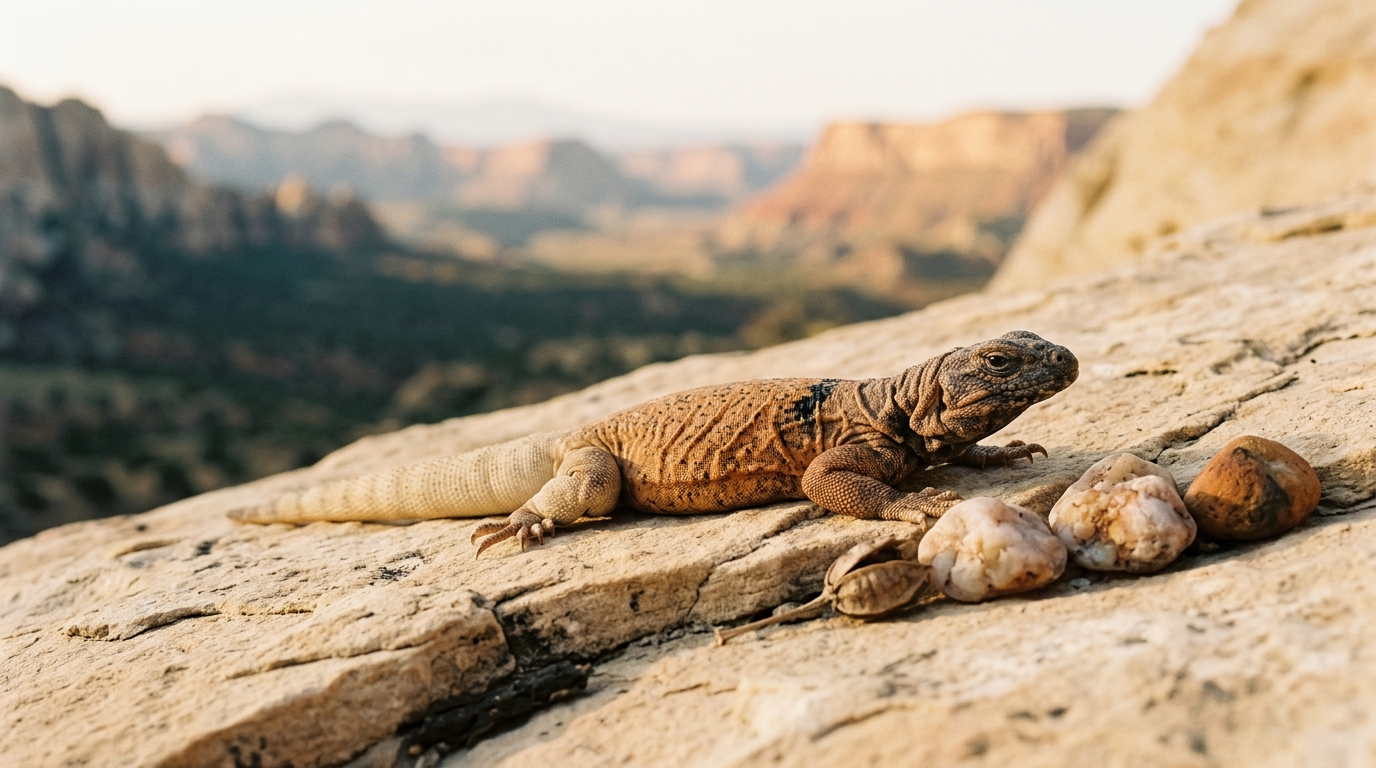
In practice
There is no single way in. These six entry points cover how visitors learn, how researchers contribute, how Indigenous communities lead, and how supporters help sustain the work.
Common questions
Ways to engage
There is no single way in. These six entry points cover how visitors learn, how researchers contribute, how Indigenous communities lead, and how supporters help sustain the work.
Start with what a chuckwalla actually is — a stout, herbivorous lizard native to Southwest deserts — and how to identify it respectfully in the wild.
Plan low-impact visits to public lands and interpretive sites where chuckwallas, their habitat, and the wider desert can be experienced firsthand.
Read the species through the cultural lens of the Indigenous tribes who have known and named these landscapes since long before they were called the Southwest.
Researchers track chuckwalla populations as a signal of desert health. Citizen-science observation and donor support both extend that work.
The chuckwalla cannot be conserved separately from its dry lands. Habitat protection — water, plants, undisturbed rock — is the practical work of conservation.
Communities across chuckwalla country use the species as a symbol of place — in education, in tourism, and in the long argument for a healthy desert future.
Curriculum coverage
Chuckwalla.org is the educational front door. ChuckwallaCountry.org carries the visitor and place-based story; the wider State-Proud Network carries the regional-identity frame.
An herbivorous reptile that helps maintain the balance of desert plant communities and serves as prey for native predators.
A species held in respect by Indigenous tribes of the Southwest — present in story, language, and traditional knowledge.
A recognizable native of the deserts that span Southern California, Nevada, Arizona, and northern Mexico — a shared marker of place.
A practical reminder that protecting one species means protecting the whole dry-land system that sustains it.
Plan your visit
Visit public lands and interpretive sites that welcome visitors — national monuments, state parks, and partner-managed areas in chuckwalla country.
Chuckwallas are most visible in warmer daylight months. Mornings and late afternoons are easiest on you and easiest on the lizard.
Water, sun protection, sturdy footwear, and a real map. Cell coverage is unreliable in much of the range — plan accordingly.
Watch from a distance. Don't lift rocks, don't handle wildlife, and stay on established routes — desert soils and creatures recover slowly.
Pack out everything you bring in, follow Leave No Trace principles, and consider supporting the local stewards who keep these landscapes intact.
Network links
The visitor and place-based companion site — interpreting the broader landscape that the chuckwalla calls home.
VisitThe State-Proud Network home — a national project documenting regional identity, ecology, and the work of place.
VisitSister sites in the regional-identity registry that cover neighboring desert places, species, and conservation stories.
VisitLand trusts, tribal nations, and public-land agencies working across chuckwalla country — linked through the State-Proud Network.
VisitGet involved
Whether you live next to the desert or have only ever read about it, the chuckwalla is an entry point. Reach out to learn about visiting respectfully, supporting Indigenous-led stewardship, or contributing to ongoing conservation work.
Email the Chuckwalla.org team